Table of Contents
Quick Answer
In children’s literature, AI is becoming a powerful tool, particularly in creating illustrations that captivate young imaginations. As technology advances, AI can significantly enhance the detail and realism of dinosaur illustrations, but it also presents the risk of inaccuracies that may impact their educational value. AI is revolutionizing how dinosaurs are depicted in kids’ books, making it crucial to balance artistic creativity with accurate representation.
These changes prompt us to explore the broader role AI plays in shaping the stories and images that fill our children’s bookshelves.
What Role Does AI Play in Children’s Books?
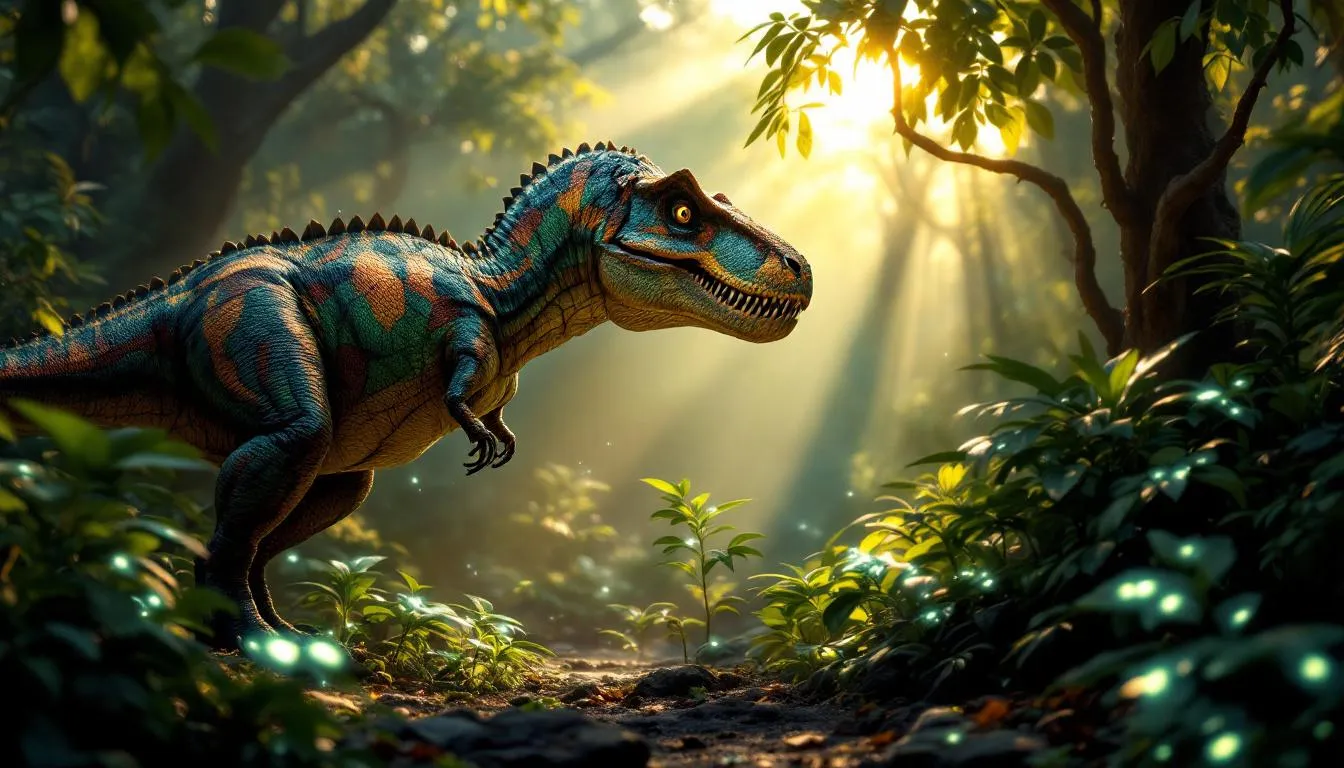
AI acts like a magical paintbrush of the 21st century, bringing stories to life in unprecedented ways. Its role in children’s books extends beyond storytelling; it crafts images that capture young minds. Imagine a dinosaur’s scales shimmering with the perfect shade of green, or an ancient jungle leaping off the page, all thanks to AI’s artistic flair.
AI serves as a collaborator rather than merely a tool, analyzing thousands of images to generate vivid and unique illustrations. This ability to sift through vast data allows AI to create illustrations that are not only imaginative but also stylistically diverse—a dinosaur emerging from a kaleidoscope of colors, each scale a masterpiece.
I’ve witnessed this innovation firsthand. My niece has a favorite book where AI-generated dinosaurs boast fantastic textures and intricate details that seem almost tangible. These illustrations spark her curiosity and questions, which is the hallmark of a great book.
AI’s impact is notable in several ways:
- It generates illustrations faster than traditional methods, ensuring kids’ books are both current and affordable.
- It offers a range of styles, from cartoonish to hyper-realistic, catering to varying age groups and tastes.
- AI can personalize illustrations, integrating a child’s name or likeness into a story, enhancing the interactive reading experience. An example of this innovation is KidTeller creates a personalized storybook where your child is the hero. Just upload a photo, and we’ll generate a custom book filled with adventures made especially for your toddler or young child – magical, memorable, and uniquely theirs.
However, with great power comes great responsibility. As AI continues to shape illustrations, it’s essential to consider the accuracy and educational value behind these mesmerizing images.
How Accurate Are AI-Generated Dinosaur Illustrations?
AI-generated dinosaur illustrations can be a mixed bag of accuracy. While AI excels in creating visually stunning and imaginative images, it occasionally takes liberties that result in eyebrow-raising inaccuracies. I recall a children’s book depicting a T-Rex with feathers akin to a rooster’s flamboyant plumage. Although studies suggest some dinosaurs might have had feathers, this portrayal seemed more suited for a farmyard than a prehistoric scene.
Inaccuracies often arise from AI’s dependence on existing data, which may be outdated or incorrect. For example, AI might depict dinosaurs with erroneous skin textures or colors due to reliance on older scientific models or artistic interpretations, leading to illustrations that veer into fantasy.
While these inaccuracies might seem harmless, they can affect the educational content of children’s books. When kids see a brightly colored, feather-covered Triceratops, they might accept it as scientific truth, potentially leading to misconceptions about these fascinating creatures and their history. The challenge is to ensure AI-generated content maintains a balance between creativity and scientific accuracy.
As we delve into AI’s influence on these depictions, it’s crucial to harness AI’s potential for creating engaging yet accurate representations of these ancient giants. Balancing imagination with factual precision ensures children learn with both wonder and knowledge.
How Does AI Influence the Quality of Dinosaur Depictions?
When flipping through a children’s book, you might notice some dinosaur illustrations appear as if plucked straight from an artist’s dreamscape. This is the magic of AI at work, shaping the quality of these depictions in fascinating ways.
Let’s compare AI-generated illustrations with those crafted by human hands.
Striking examples abound in children’s books. Take “Dinosaurs in My Backyard,” a book my nephew loves. It features AI-generated dinosaurs bursting with colors and patterns. While visually stunning, some of these dinosaurs lean toward the fantastical, appearing more like magical creatures than inhabitants of the Mesozoic era. In contrast, books like “The Real Deal Dinosaurs” involve collaborations between paleontologists and artists, offering a more accurate glimpse into the world of dinosaurs with scientifically informed portrayals.
As we consider the implications of accuracy in these illustrations, it’s essential to weigh AI’s creative freedoms against their influence on young, impressionable minds. Balancing fact with fantasy is not just an artistic decision but an educational one, shaping how children perceive history and science.
What Are the Implications of Inaccurate AI Content?
The implications of inaccurate AI content in children’s books are significant, especially for shaping young minds. Kids are naturally curious and absorb information like sponges. When presented with inaccurate dinosaur depictions, they may develop misunderstandings that persist into adulthood. Imagine a child flipping through a beautifully illustrated book and seeing a Stegosaurus with fairy wings. While this might spark laughter and imagination, it also plants seeds of misinformation.
The learning impact is twofold. Inaccurate illustrations can hinder a child’s understanding of natural history. I recall my confusion as a child upon discovering that some favorite dinosaur illustrations were more fantasy than fact. It felt like learning Santa Claus wasn’t real—a piece of childhood wonder chipped away. Conversely, fantastical depictions can foster creativity, encouraging kids to dream and create their own stories. Balancing these aspects is crucial to nurturing both knowledge and imagination.
However, consistent exposure to inaccuracies can skew a child’s perception of science, affecting their educational development and interest in subjects like paleontology. It’s vital for parents and educators to be mindful of the content children engage with, ensuring it is both inspiring and informative.
As we guide our little learners through the world of dinosaurs and beyond, the next step is exploring how caregivers can discern reliable resources that educate while captivating young imaginations.
How Can Parents and Educators Choose Reliable Resources?
Choosing reliable resources for children’s dinosaur books, particularly those with AI-generated content, can feel like navigating a prehistoric jungle. But fear not, clear paths exist to ensure the books you choose balance creativity with educational value.
First, examine the authors and illustrators involved. Books created in collaboration with paleontologists or recognized experts often offer more accuracy. When selecting books for my niece, I look for credentials or acknowledgments from scientific contributors, ensuring illustrations don’t feature a Velociraptor with a top hat and monocle—unless it’s purely for fun!
Next, consider the book’s publisher. Reputable publishers typically adhere to strict editorial standards, ensuring their books are both engaging and factual. Checking customer reviews can also provide insight into whether the book strikes the right balance between fact and fantasy.
Blending AI with traditional resources is key. While AI can add a fresh, vibrant twist to illustrations, traditional books, with their hand-drawn charm, offer depth in storytelling that’s hard to replicate. In our household, we mix AI-enhanced books with classic dinosaur tales. This keeps our bookshelf eclectic and ensures varied perspectives, nurturing both imagination and knowledge.
As you embark on the journey to choose the best resources, remember the goal is to spark curiosity and inspire learning. By curating a diverse collection, you lay a foundation for a lifelong love of reading and discovery. Moving forward, keep these essential points in mind…
Key Takeaways
- AI enhances dinosaur illustrations with vibrant, diverse styles but risks inaccuracies.
- Accuracy is key: collaborate with paleontologists for credible content.
- Mix AI-generated books with traditional ones for a balanced educational experience.
- Verify authors and publishers for scientific credibility and quality assurance.
- Use reviews to gauge the book’s balance between creativity and factual content.
Remember, nurturing curiosity and imagination in your child is a journey. By choosing wisely, you lay the groundwork for a lifetime of exploration and learning.