Table of Contents
Quick Answer
Two Canadian children made headlines by presenting a Book of Mormon to the Prime Minister, igniting unexpected discussions about interfaith dialogue and understanding. Their gesture demonstrated how small acts can spark meaningful conversations across cultural and religious lines.
This heartwarming encounter reminds us of the impact even the youngest among us can have in fostering communication and unity.
What Happened When Kids Approached the Prime Minister?
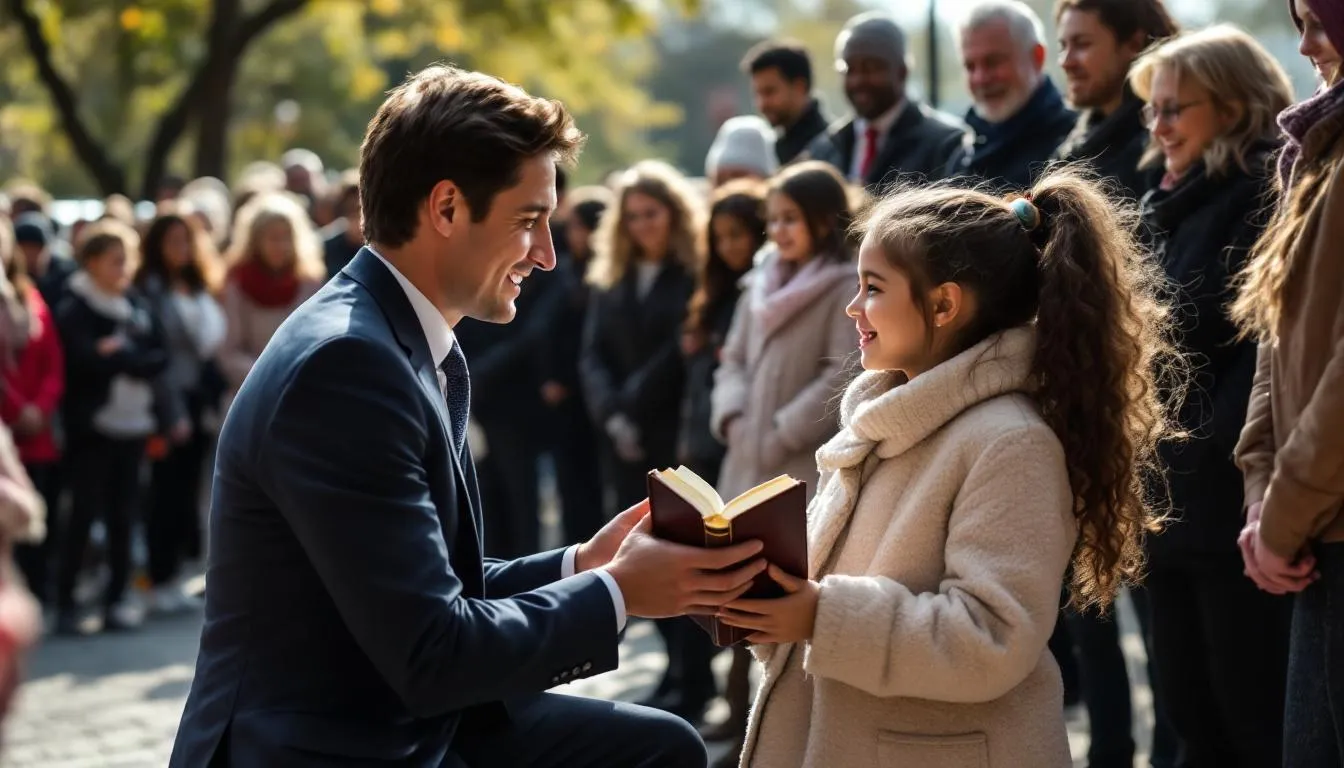
Imagine a bustling public event where the Prime Minister of Canada is surrounded by crowds, cameras flashing, and people eager to catch a glimpse of their leader. Amidst this scene, two young children, with the innocent bravery unique to youth, step forward. In their hands, they hold a copy of the Book of Mormon, which they offer to the Prime Minister with wide-eyed sincerity.
This charming moment captured many people’s attention. The Prime Minister, known for his openness and warm demeanor, reacted with genuine interest and gratitude. He bent down to the children’s level, listening intently as they explained their gift. His response was not just a polite nod; he engaged in conversation, appreciating their gesture and acknowledging the significance of their offering. This interaction was captured by those around and quickly spread across media platforms, sparking discussions nationwide.
The immediate public response was overwhelmingly positive. People were moved by the children’s courage and the Prime Minister’s gracious reception. Social media buzzed with praise for the kids’ initiative and the leader’s willingness to engage in such a candid exchange. It wasn’t just a photo opportunity; it was a moment of connection that resonated with many, highlighting the power of open dialogue and mutual respect.
This event serves as a reminder of how small acts can inspire larger conversations. It encourages us to consider how gestures like these might influence interfaith relations and foster a more inclusive society.
Why Is This Gesture Significant in Interfaith Relations?
In today’s increasingly diverse world, interactions between different religious communities are essential for fostering a harmonious society. When two kids courageously approached the Prime Minister with their gift, it wasn’t just about handing over a book; it was a bridge-building moment, highlighting the importance of interfaith dialogue—a dialogue that can often seem daunting for adults, yet comes naturally to children.
Interfaith interactions open doors and minds, allowing us to step outside our beliefs and see the world from another perspective, promoting empathy and understanding. Consider a community event where local mosques, churches, and temples come together to share their traditions. These gatherings often lead to rich conversations and newfound friendships, breaking down stereotypes and misconceptions.
This gesture by the children encouraged an open dialogue, inviting people to engage in conversations about their beliefs and fostering an environment where questions are welcomed and differences are respected. Such actions can dismantle barriers, showing that at the heart of every faith is a shared humanity.
When small acts like these occur, they remind us of the power individuals have to influence broader conversations. They can inspire others to take similar steps, creating a ripple effect that reaches far beyond the initial interaction. Reflecting on this moment prompts us to think about how we, too, can engage in meaningful exchanges in our communities.
How Do Simple Gestures Influence Broader Conversations?
Simple gestures can sometimes spark conversations that ripple across communities, much like the children’s unexpected gift to the Prime Minister. History is rich with such moments. Take Rosa Parks, whose refusal to give up her bus seat wasn’t just about sitting comfortably; it ignited the Civil Rights Movement. Or consider young Pakistani activist Malala Yousafzai, who began advocating for girls’ education with a blog post. Her courage led to global discussions on education and women’s rights.
These examples reveal a profound truth: individual actions can serve as catalysts for larger movements. Whether it’s a child handing over a book or a single person standing firm against injustice, these acts remind us of our shared humanity and the power of empathy. In a world that often feels divided, such gestures can be potent reminders that we all have the capacity to listen, learn, and connect.
These moments encourage us to look beyond our immediate circles and question our assumptions. They invite us to engage with different perspectives, leading to more inclusive and understanding communities. Witnessing these gestures often inspires us to consider our potential to influence change, no matter how small our actions may seem.
As we explore the broader societal implications, it’s clear that these individual acts don’t just end with the initial conversation. They plant seeds for a more empathetic and interconnected world.
What Are the Broader Implications for Society?
When a seemingly simple act, like two children offering a Book of Mormon to the Prime Minister, sparks national dialogue, it underscores the profound impact such gestures can have on religious tolerance and societal cohesion. This moment of genuine connection invites us to reflect on how open conversations between different faiths can lay the foundation for a more harmonious society.
Imagine if more of these interactions took place in our everyday lives. Community centers could host interfaith potlucks where everyone brings a dish from their cultural or religious background. These gatherings wouldn’t just fill our plates; they’d enrich our understanding of one another. We’d start to see the shared values that bind different faiths together—like kindness, compassion, and community—rather than focusing on differences.
Moreover, schools could integrate interfaith dialogues into their curricula, encouraging students to explore and respect diverse perspectives. I recall a time during my school years when a classmate shared a Hindu festival’s significance. It wasn’t just a lesson in religious studies; it was a colorful window into a world of traditions and values that I hadn’t known before. Moments like these can transform educational experiences, encouraging empathy and reducing prejudice among future generations.
By fostering environments where these conversations are welcomed, we can start to build a tapestry of inclusivity that stretches across communities. Encouraging such interactions can help break down walls of misunderstanding and lead to a society where diversity is celebrated, not merely tolerated.
As we think about the broader societal implications of these gestures, it’s crucial to consider actionable ways to nurture such dialogue.
Key Takeaways
- Small gestures hold immense power: Simple acts, like giving a book, can spark significant societal conversations and foster unity.
- Interfaith dialogue is vital: Engaging with diverse beliefs enriches understanding and builds cohesive communities.
- Encourage cultural exchanges: Participate in community events and share your culture to foster mutual respect and empathy.
- Inspire young minds: Teach children the value of diversity and inclusion through real-world examples and experiences.
Remember, every small step you take can pave the way for a more inclusive and understanding world. Let your actions be the seeds of change.