Table of Contents
Quick Answer
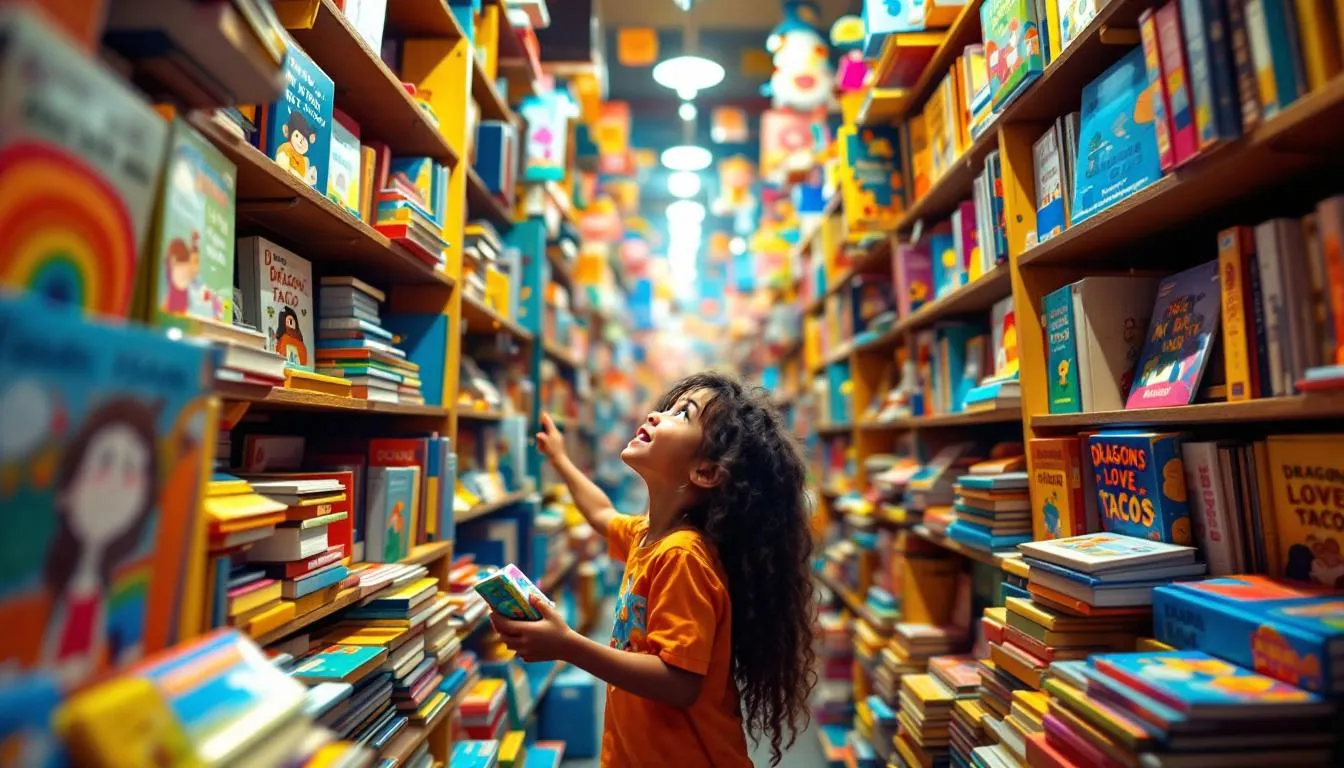
Imagine walking down the children’s book aisle, drawn to titles like “The Day My Butt Went Psycho” or “Dragons Love Tacos.” These quirky, outrageous titles are more than just amusing; they strategically grab attention and reflect the playful, humorous nature of today’s culture. Modern kids’ book titles are designed to engage children and mirror contemporary humor trends. This trend is not just about fun; it’s about connecting with young readers in a world where capturing attention is crucial.
What Drives the Trend of Outrageous Titles?
Capturing a child’s attention in today’s fast-paced digital world is no small feat. With distractions like video games, YouTube, and social media, books need to stand out. Outrageous titles serve as a beacon amidst the noise, calling out to young readers with their eccentric charm.
Digital Media Influence and Short Attention Spans
In an age accustomed to quick, eye-catching online content, books must adapt. A quirky title grabs attention like a viral video or meme, suggesting, “Hey, look at me! I’m fun!” As a parent, I’ve watched my children gravitate towards the wackiest-looking books simply because they piqued their curiosity.
The Role of Humor in Children’s Development
Humor is more than giggles—it’s vital for development. Funny titles serve as a gateway to a child’s imagination, encouraging creativity and a whimsical worldview. A book titled “There’s a Dragon in My Backpack” can expand a child’s imagination, prompting them to consider the oddest possibilities.
Marketing Strategies in a Competitive Market
In a crowded market, publishers and authors need strategies. A memorable, outrageous title isn’t just creative; it’s a clever marketing tool designed to capture interest quickly. It’s like choosing between a plain donut and one topped with sprinkles and a cherry. Which would you pick? Exactly.
These titles are more than marketing gimmicks; they mirror the playful spirit of our times, becoming a cultural phenomenon reflecting broader trends in contemporary culture.
How Do These Titles Reflect Contemporary Culture?
Scrolling through social media, a meme might grab your attention with its quirky, funny, and outrageous nature. This humor has permeated our lives, influencing conversations and, unsurprisingly, book titles. Kids today grow up in a world where internet culture and memes significantly shape their sense of humor. Seeing a book titled “My Teacher is a Monster! (No, I Am Not.)” is like spotting a meme on a bookshelf, speaking their language and inviting them into a familiar world.
Parenting styles have also evolved. There’s a shift towards more open, playful interactions with children. Books no longer need to impart a serious lesson with every page. Now, it’s about engaging kids on their level, where fun and learning coexist. Parents today might appreciate a title like “Don’t Let the Pigeon Drive the Bus!” as it aligns with their approach to nurturing creativity and joy in learning.
These titles also reflect societal values, addressing themes of diversity, kindness, and acceptance with humor and creativity. They offer children a safe space to understand and engage with the world in a light-hearted way.
What Makes a Title Appealing to Kids?
Imagine a child discovering a book titled “Aliens Love Underpants”—it’s a whirlwind of surprise and curiosity! Outrageous titles ignite intrigue, as kids naturally wonder, “What on Earth could this be about?”
Playful language and puns are key elements that draw children in. Titles like “The Wonky Donkey” or “The Day the Crayons Quit” are catchy and promise humor and fun. They tap into a child’s sense of play, using wordplay that elicits giggles even before the first page is turned. I recall my own child laughing at “Interrupting Chicken”—the title alone sparked curiosity about the story inside.
Visual appeal also plays a crucial role. Titles with memorable phrases stick with a child long after leaving the bookstore. Imagine a cover with bright colors and whimsical illustrations that match the lively language of the title—it’s a magnet for young readers! This combination of visual and textual allure is often the first step in a child’s journey into a book.
How Do Authors and Publishers Choose These Titles?
Selecting a children’s book title involves creativity, strategy, and a dash of science. Authors and publishers often start with focus groups to gather insights from kids and parents on what catches their eye. Imagine young readers flipping through potential book covers, their faces lighting up at intriguing titles. This feedback is invaluable in crafting titles that resonate with the audience.
The process is collaborative, involving authors, editors, and marketing experts. It’s like a creative jam session, where ideas bounce until a title emerges that everyone believes in. An author might propose a quirky idea, which the marketing team refines to ensure it aligns with trends and has broad appeal. A fellow writer once described this as an exhilarating puzzle, where every piece must fit perfectly.
Trends play a significant role too. By analyzing successful past titles, publishers identify what’s hot in the market. Take “The Wonky Donkey” or “Dragons Love Tacos”—these titles were crafted to align with children’s humor and interests. This analytical approach ensures new titles stand out and thrive in the bustling book market.
Are There Any Downsides to This Trend?
While delightful, outrageous titles capture attention, they can sometimes overshadow the content inside. As a parent, I’ve picked up books for my kids because the title made us chuckle, only to find the story didn’t match the initial excitement. It’s like choosing a movie based solely on its trailer—sometimes, the most memorable part is the preview.
Balancing humor with educational value is another challenge. A title like “The Day My Butt Went Psycho” might tickle a child’s funny bone but leave parents questioning the substance behind the silliness. Ideally, books should entertain while offering valuable lessons or insights. I appreciate authors who weave humor into stories with educational merit, striking a balance between fun and learning.
There’s also the risk of children becoming desensitized to traditional book titles. With so many flashy, humorous options, a classic title might seem bland by comparison. Like a child preferring candy over vegetables, they might overlook a well-written story because its title doesn’t scream for attention. This shift could lead to a decreased appreciation for timeless tales that have captivated generations.
Navigating the whimsical world of children’s literature, it’s important to consider both the benefits and potential pitfalls of outrageous titles. By doing so, we can guide young readers toward a balanced literary diet that satisfies both their cravings for fun and their need for meaningful stories.
Key Takeaways
- Outrageous, humorous titles effectively capture children’s attention, fostering a love for reading.
- These titles mirror contemporary culture and digital trends, making them relatable to young readers.
- While creativity in titles is important, balancing humor with meaningful content remains essential.
Embrace the playful spirit of modern children’s literature while guiding kids toward stories that ignite both laughter and learning. Encourage their curiosity and imagination—it’s the key to nurturing lifelong readers!