Table of Contents
Quick Answer
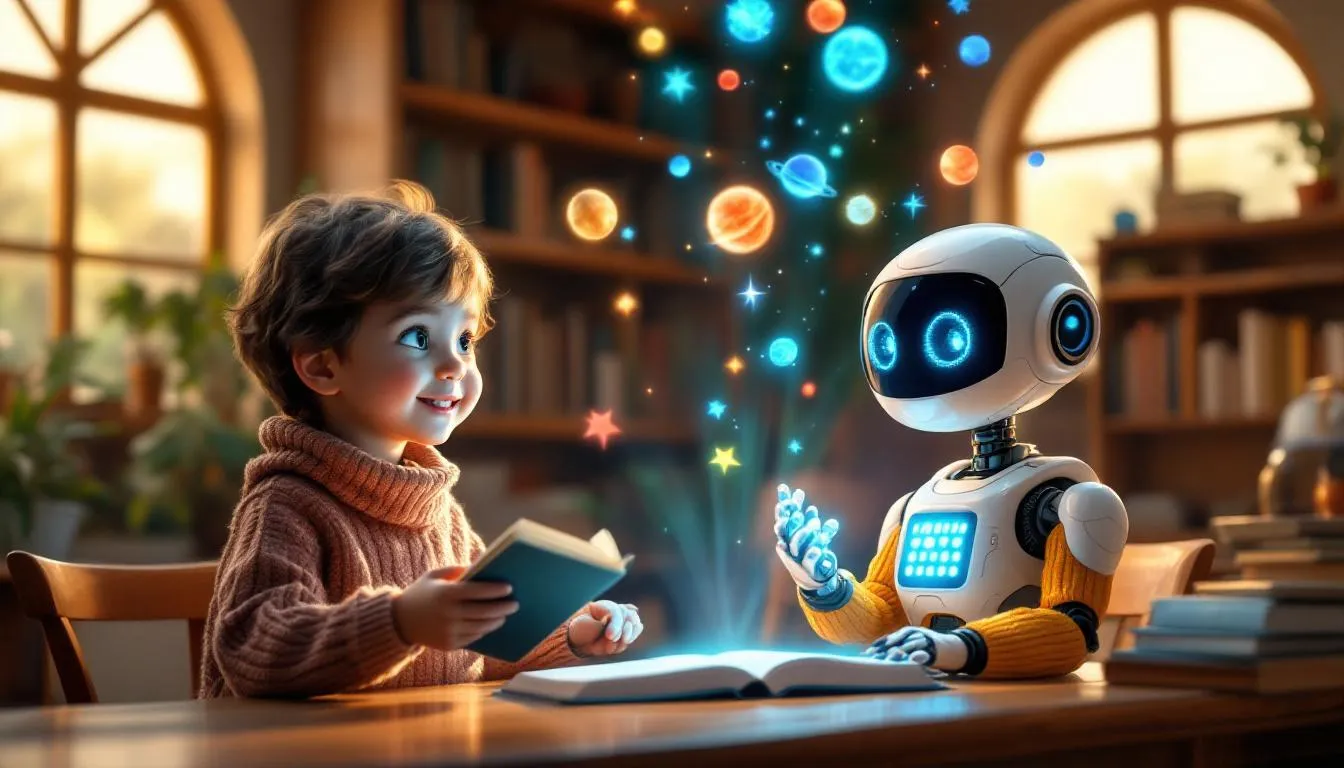
Children’s books possess a unique charm for explaining complex topics like Artificial Intelligence (AI) to young minds. They employ relatable characters and engaging narratives to distill intricate ideas into digestible, understandable pieces. Indeed, children’s books can effectively introduce AI concepts to kids by simplifying complexities and sparking curiosity.
I fondly recall reading a book about robots to my child, marveling at how a simple story transformed the concept of AI from science fiction into a fun technological adventure.
How Do Children’s Books Simplify AI Concepts?
Children’s books have a magical ability to transform something as complex as AI into a delightful tale of discovery. They often introduce relatable characters—such as robots, animals, or even animated objects—that children can easily connect with. These characters embark on adventures, using AI-like abilities to solve problems, making the concept approachable and exciting. I remember my daughter’s giggles as she read about a robot named Max predicting rain, just like our weather apps!
Beyond this, many children’s books depict AI as magical or friendly helpers. Imagine a story where a digital assistant named “Gizmo” aids a young boy in organizing a surprise party. By portraying AI positively, these books teach kids that technology can be an ally, not something to fear—a bit like Mary Poppins with a digital twist!
Moreover, these stories weave AI into everyday scenarios, helping kids see its real-life applications. Whether a character uses AI to find a lost pet or assist with homework, these narratives show AI’s practical side in a child’s world. It’s like a gentle nudge saying, “This isn’t just a story—it’s part of your life, too!”
This storytelling magic not only fosters understanding but also opens the door to discussions about AI’s role in daily life, paving the way for exploring the benefits of introducing AI through books.
What Are the Benefits of Introducing AI Through Books?
Introducing AI through children’s books offers a treasure trove of benefits, each as delightful as discovering a new favorite story. By weaving AI concepts into engaging narratives, these books can ignite early interest in technology and sciences. Picture a child, wide-eyed and curious, asking how a story’s robot friend knows so much about the stars. This curiosity serves as a launching pad, encouraging young minds to explore further, perhaps nurturing future scientists or tech enthusiasts.
Moreover, these stories effectively develop critical thinking and problem-solving skills. When a book character uses AI to solve a mystery or navigate a tricky situation, kids naturally start thinking along those lines. They begin to ask, “How would I handle this?” or “What could I invent to make things easier?” It’s like gifting them a mental toolkit for their daily adventures.
Another gem of introducing AI through books is promoting an understanding of technology’s impact on everyday life. When children see AI in their story worlds, they start recognizing its presence in their own lives. Whether through a virtual assistant setting reminders or a smart toy learning new tricks, kids begin to see technology as both familiar and influential—crucial understanding in a tech-intertwined world.
As we dive deeper, let’s explore specific books that effectively teach these concepts, sparking curiosity and learning.
Which Children’s Books Are Effective in Teaching AI?
In the world of children’s literature, several standout books make explaining AI to kids not only possible but incredibly fun. One favorite is “Hello Ruby: Journey Inside the Computer” by Linda Liukas. This book invites kids into a world where they explore computing and AI basics through playful activities. Ruby, the curious protagonist, embarks on adventures that highlight creativity and innovation, encouraging children to see technology as something they can interact with and understand.
Another gem is “If: A Mind-Bending New Way of Looking at Big Ideas and Numbers” by David J. Smith. It uses imaginative scenarios and vibrant illustrations to introduce kids to complex concepts, including AI, by scaling them down to relatable sizes. It’s like transforming a giant puzzle into a fun, manageable game.
These stories emphasize imagination and innovation. They don’t just teach kids what AI is; they inspire them to think creatively. By showing AI as a tool for creativity, these books nurture a mindset that embraces new ideas and possibilities.
Visuals also play a crucial role. Bold, colorful illustrations capture a child’s attention and make abstract ideas concrete. Storytelling weaves these elements together, creating a memorable learning experience that endures long after the book is closed.
As we consider fostering a love for learning about AI, parents and educators play a vital role in supporting this journey.
How Can Parents and Educators Support Learning?
Supporting your child’s journey into AI starts with open-ended discussions. After reading a story about AI, I enjoy asking questions like, “What do you think the robot in the story could do that humans can’t?” or “How would you use AI to help you with something fun?” These questions encourage critical and creative thinking, sparking conversations that often lead to fascinating insights.
Engaging in hands-on activities reinforces concepts from books. Try a simple project like creating a “robot” using household items, where your child imagines and explains its AI powers. This play not only entertains but also solidifies understanding tangibly. Exploring coding games or apps for kids often introduces AI principles in an interactive format.
Encouraging curiosity beyond the pages is key. When my son showed interest in a story’s AI character, we spent an afternoon exploring real-life AI, like asking questions to a virtual assistant or experimenting with a coding app. This exploration fosters deeper understanding and helps kids see AI as more than just a book concept. For additional engaging content, consider watching children’s read-along videos such as “Creepy Carrots!”, which can further spark interest in storytelling and reading.
Teaching AI to kids is filled with opportunities and challenges, from simplifying concepts to addressing misconceptions. Understanding these hurdles helps us guide young learners through AI’s fascinating world.
What Are the Challenges of Teaching AI to Kids?
Teaching AI to kids through books is a wonderful adventure, but it comes with challenges. One tricky part is balancing simplicity and accuracy. Imagine explaining to your child that AI can “learn” from data without implying their teddy bear might start doing homework! Using analogies, like comparing AI’s learning to how they learn new words by listening and repeating, can bridge this gap. The key is simplifying without losing AI’s essence.
Another challenge is ensuring AI stories don’t inadvertently create a fear of technology. We’ve all seen those sci-fi movies where robots take over the world, right? It’s vital to use narratives that paint AI as a helpful friend rather than a mysterious force. For instance, stories where AI helps characters solve problems or learn new things foster a positive outlook. Much like telling tales of friendly dragons instead of fearsome ones, it’s about shaping a narrative that encourages curiosity rather than fear.
Finally, language and content must be age-appropriate, avoiding overly technical jargon that might overwhelm young readers. Instead, focus on language resonating with their everyday experiences. A story about a digital assistant helping with a school project is relatable and demonstrates AI’s potential in a child’s world.
As we explore the ways to introduce AI to children effectively, it’s crucial to remember the small steps and insights that make the process enriching and enjoyable.
Key Takeaways
- Children’s books are an effective tool for introducing AI concepts to young readers in a fun and understandable way.
- These books simplify complex subjects using relatable characters and engaging narratives that resonate with kids.
- Encouraging curiosity and critical thinking through stories fosters a deeper interest in technology and problem-solving.
- Hands-on activities, like creating robots from household items, reinforce learning and make AI concepts tangible.
- Open discussions about AI after storytime can lead to insightful conversations and further exploration.
Embrace the magic of storytelling to spark your child’s curiosity about AI and inspire a lifelong love of learning!